The election of Pope Leo XIV on May 8, 2025, marked the ascent of the first American-born and first Augustinian pope to the Chair of Peter. Born Robert Francis Prevost in Chicago, his path to the papacy was profoundly shaped by over two decades of missionary service in Peru, reflecting a life dedicated to evangelization and pastoral care.
Robert Francis Prevost was born on September 14, 1955, in Chicago, Illinois, to Louis Marius Prevost and Mildred Martínez. Raised in Dolton, a working-class suburb, he was the youngest of three boys in a devout Catholic family. In several interviews during the days after his election, his brother John remembered a prophetic moment in his first grade, when a neighbor told young Rob he would become the first American Pope.
Known as “Rob” to family and “Bob” to friends, he grew up serving at the altar of St. Mary of the Assumption Parish and singing in the choir. He attended St. Augustine Seminary High School in Michigan, earned a math degree at Villanova University, then a Master of Divinity in Chicago, and a Doctorate in Canon Law in Rome. His academic work focused on Augustine’s idea of religious authority as service, not power—a vision that shaped his leadership.
He was ordained a priest on June 19, 1982, at the Augustinian College of Saint Monica in Rome by Archbishop Jean Jadot.


In 1985, Father Prevost was sent to Peru as a missionary. There, in a region plagued by guerrilla violence and poverty, he became a deeply rooted pastoral figure. “Had he stayed in his native country, I think his sense of the Church would’ve been very different,” said Aldo Llanos, a professor of philosophy and anthropology at Peru’s University of Piura. “But he came to Peru in 1985—a country in crisis—and was changed by it. That experience left a mark.”
He became a Peruvian citizen in 2015, fulfilling a requirement for his appointment as bishop. He led formation programs for Augustinians, taught theology, and served as a judge in the regional ecclesiastical court. He was known for pragmatic compassion, scholarly rigor, and a quiet charisma.
Affectionately known as the "Saint of the North", Father Prevost stood out for his humanitarian outreach in northern Peru:
 Supported soup kitchens to feed vulnerable communities.
 Advocating for better housing in areas prone to flooding.
 Collaborated closely with local charities and social outreach programs.
 Led the "Oxygen of Hope" campaign during the Covid-19 pandemic, delivering oxygen plants to overwhelmed hospitals.
 Organized aid for Venezuelan migrants and publicly denounced discrimination against them.
“He was a missionary in the truest sense of the word: When he gave food to the hungry, drink to the thirsty, welcomed the stranger, clothed the naked, cared for the ill and visited the imprisoned, Bishop Prevost did so because in each of these he saw Christ, and also someone thirsting for Christ,” remarked Professor Llanos.
His election sparked “joyful disbelief” among his Augustinian brothers.
“He’s someone who walks with people, who brings them along on the journey,” said Father Joseph Farrell, Vicar General for the Augustinians of North America circumscription. “That’s what mission is.”
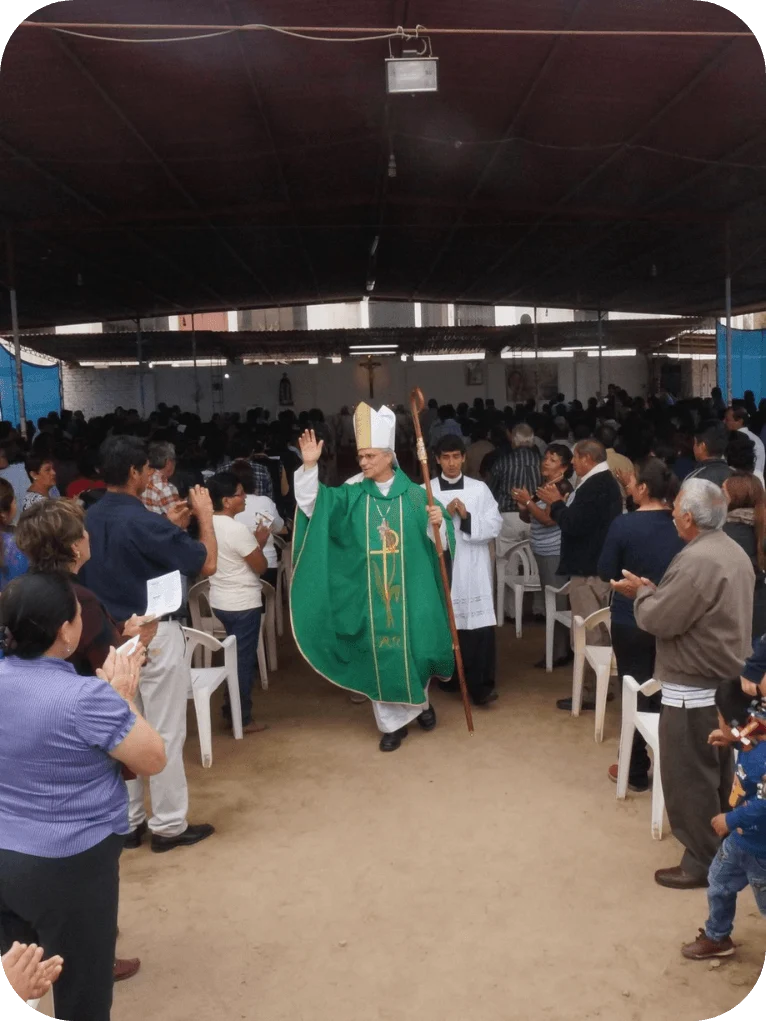

“Bishop Prevost was never the kind of bishop who gave orders from behind a desk,” said Janinna Sesa Córdova, Director of Caritas Chiclayo from 2014 to 2024. “He was the face of Christ, the one who went out into the mud to help his people.”
In 2023, Pope Francis appointed Cardinal Prevost as Prefect of the Dicastery for Bishops and President of the Pontifical Commission for Latin America. The Dicastery is responsible for identifying and supporting episcopal leadership around the world—essentially helping to discern who becomes a bishop—while the Commission serves as a bridge between the Holy See and the Church in Latin America, fostering communion and cooperation across the continent.
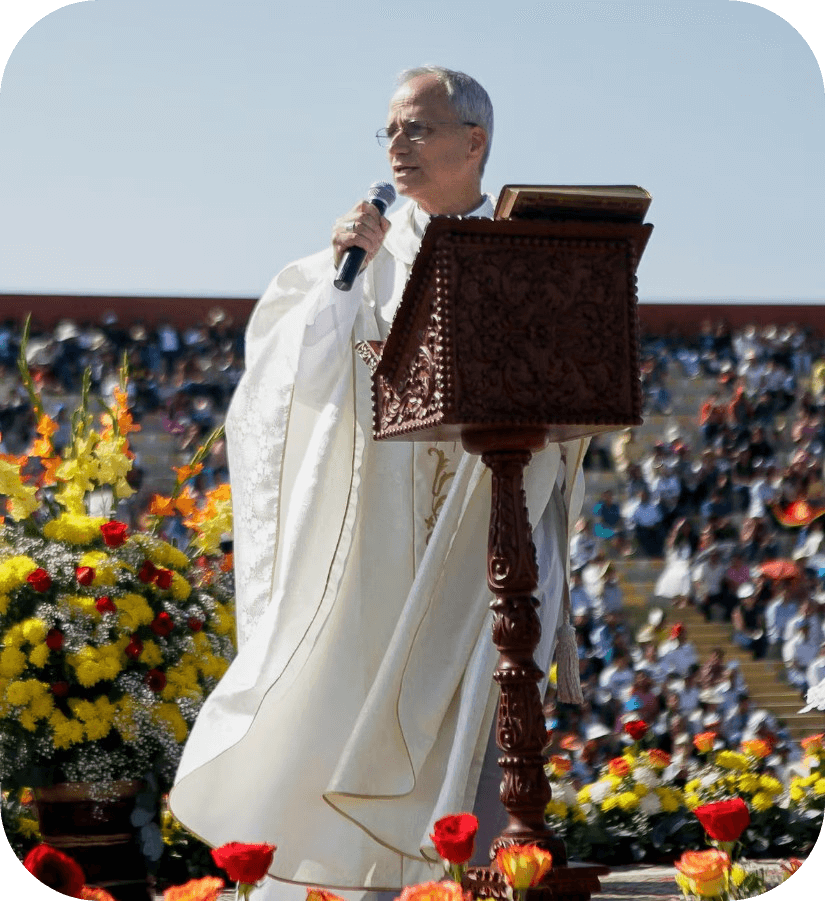
From the outset of his pontificate, Pope Leo XIV made it clear that he sees his role as a continuation of the Church’s mission to uphold human dignity, serve the poor, and proclaim the Gospel to all.
He chose the motto In Illo Uno Unum—“In the One Christ, we are one”—reflecting his desire to unify the Church across cultures, continents, and social divides.
In his first formal address to the College of Cardinals, delivered the Saturday following his election, Pope Leo explained his decision to take the name of Pope Leo XIII, who served from 1878 to 1903 and is widely considered the founder of modern Catholic social teaching.
“There are many reasons why I chose this name,” Pope Leo said, “but above all, I am inspired by Rerum Novarum.”
Issued in 1891, Rerum Novarum—“Rights and Duties of Capital and Labor”—was a groundbreaking encyclical that called for just wages, the protection of workers, and the Church's role in addressing the harsh realities of the Industrial Revolution. Pope Leo XIII wrote that “some opportune remedy must be found quickly for the misery and wretchedness pressing so unjustly on the majority of the working class.”


Pope Leo XIV drew a striking parallel to our current age: “In our own day, the Church offers to everyone the treasury of her social teaching in response to another industrial revolution—and to developments in the field of artificial intelligence that pose new challenges for the defense of human dignity, justice, and labor.”
His first words as pope, delivered just minutes after emerging onto the central balcony of St. Peter’s Basilica, echoed this same missionary impulse: “Together, we must look for ways to be a missionary Church, a Church that builds bridges and encourages dialogue, a Church ever open to welcoming, like this Square with its open arms, all those who are in need of our charity, our presence, our readiness to dialogue and our love.”
“God loves you all, and evil will not prevail,” Pope Leo said in that same address. “All of us are in God’s hands. So, let us move forward, without fear, together, hand in hand with God and with one another other!”


Subscribe to daily quotes from Pope Leo XIV


© All Rights Reserved The Pontifical Mission Societies. Donor Privacy Policy. Terms & Conditions.